
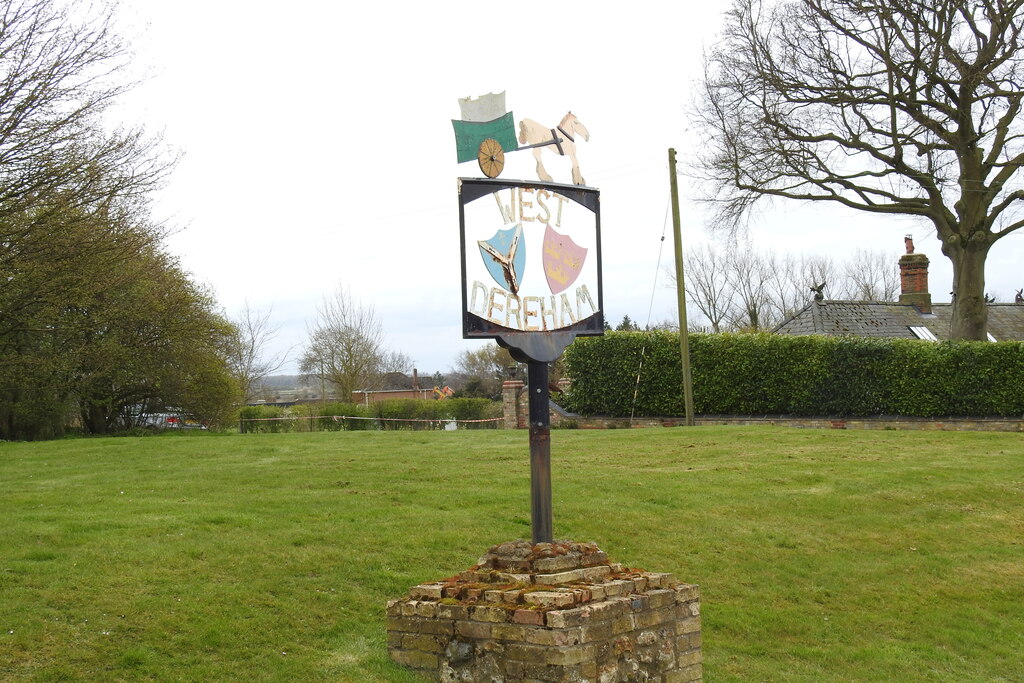
The village sign at West Dereham, Suffolk [Adrian S Pye licensed for reuse under Creative Commons Licence]
Sarah Doig returned to give us a fascinating talk on East Anglian village signs. These village signs are more than just geographical markers; they are ornate, artistic expressions of local identity, history, and community pride. Sarah has done a lot of research and started by telling us that there are around 3,000 village signs in Britain; Norfolk boasts over 500 and Suffolk is second in line with over 350. These signs are a distinctive feature of the rural landscape, offering passers-by a snapshot of the stories, industries, and legends that shaped the area.
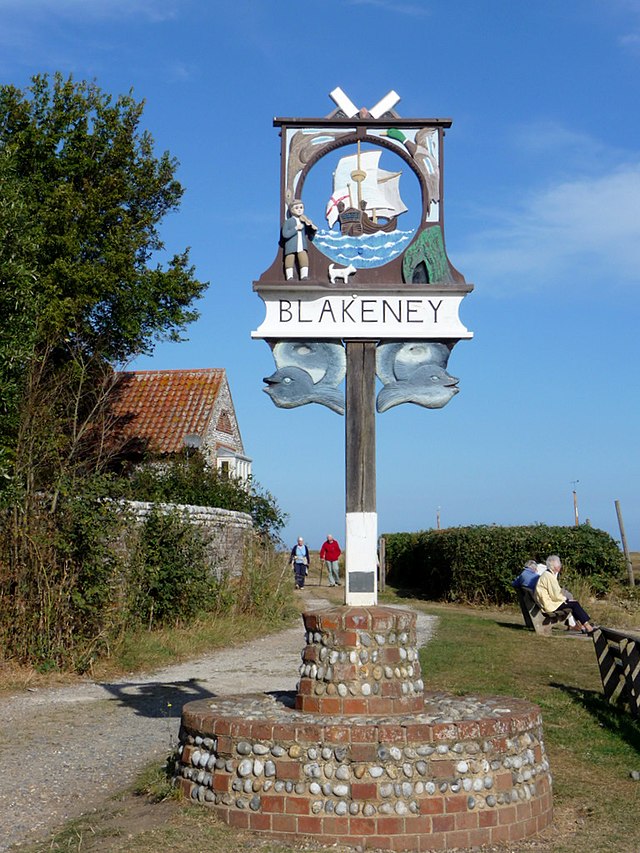
Village Sign in Blakeney, Norfolk [Christine Matthews licensed for reuse under Creative Commons Licence]
The modern East Anglian village sign tradition began in the early 20th century. Prince Albert, Duke of York (later George VI), gave a speech at the Royal Academy in 1920 encouraging the use of such signs. However, the real catalyst in Norfolk was the Sandringham estate, where the future Edward VII initiated the practice of erecting signs. The movement was subsequently promoted by the Daily Mail and enthusiastically embraced by the Women’s Institute (WI).
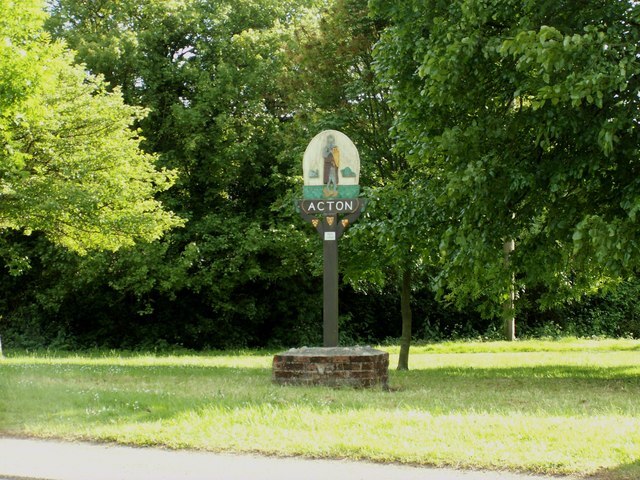
Village sign at Acton, Suffolk [Robert Edwards licensed for reuse under Creative Commons Licence]
Many of the most beautiful and iconic signs, particularly in Norfolk, were carved and painted by Harry Carter, an art and woodwork master at Hamond’s Grammar School in Swaffham. Between the 1920s and his death in 1983, Carter produced over 300 signs, establishing a recognisable style of brightly painted wood, often featuring intricate, three-dimensional carvings. For Swaffham, Harry Carter created a large wooden structure of the 15th Century pedlar, John Chapman, who, as legend has it, walked to London Bridge where he met a man who told him to walk back to Swaffham where he would find a pot of gold under an apple tree! He used his new-found wealth to build the north aisle of the church.
Village signs function as open-air history books. The imagery chosen by residents rarely highlights modern features, focusing instead on defining historical moments, local legends, or long-lost industries. The Beccles sign in Suffolk captures the moment Queen Elizabeth I presented the first Port Reeve with the Royal Charter in 1584.
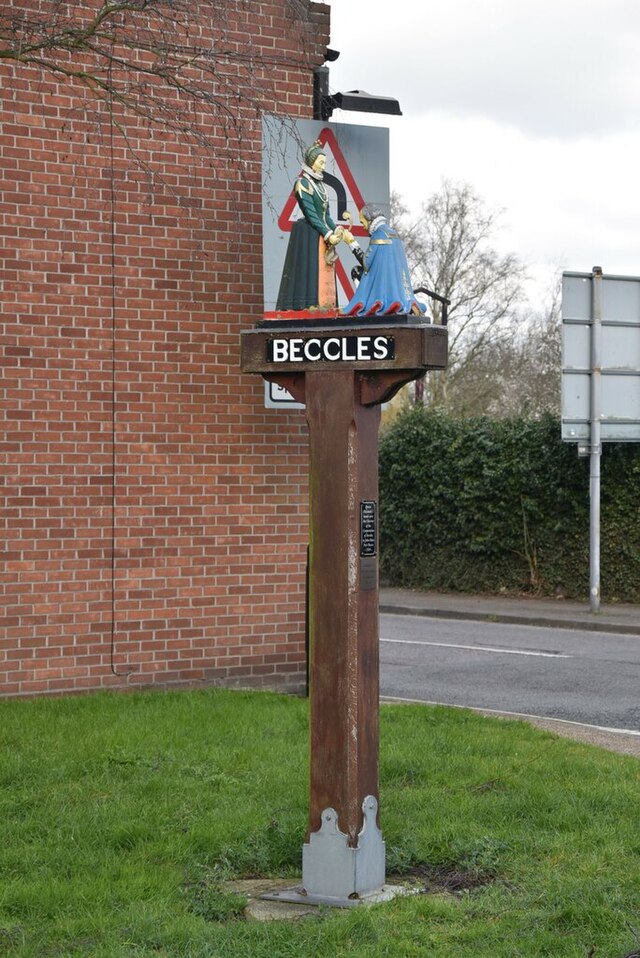
Village sign at Beccles, Suffolk [N Chadwick licensed for reuse under Creative Commons Licence]
These signs remain a vibrant, visual tradition highlighting the unique character of East Anglian villages. Sarah gave us an informative, entertaining talk and, when we next drive through an East Anglian village, we will be on the alert for these iconic signs.
Sarah Doig – 8th April 2026